Posts

Showing posts with the label census

An Ode to the Mountain Fort
Image
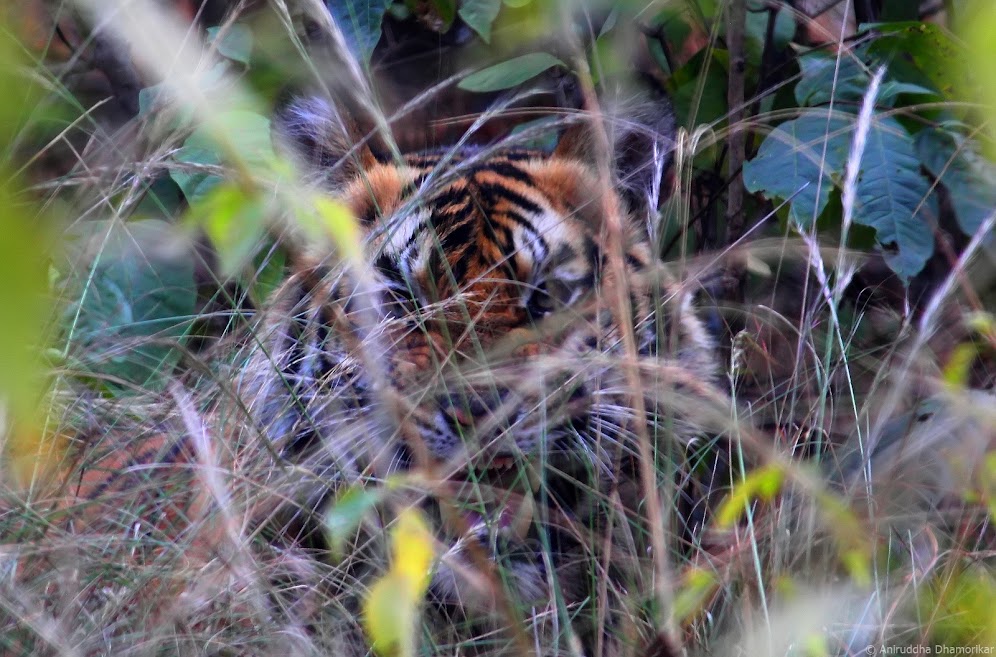
I spent most of the year exploring Bandhavgarh Tiger Reserve, more-so for the tigers than any other animal, and while the alarm calls of chital and sambar, and the occasional roars and growls of tiger still echo in my ears (thanks so much to my colleague’s ringtone), I witnessed a place that is much more than just about tigers. There are also ants here – yes, ants – I stumbled upon a trap-jaw ant ( Anochetus cf madaraszi ), a first for central India and a new record for Madhya Pradesh while I was contemplating a few seconds before deploying the last camera trap one summer evening, and observed one of the most adorable behaviour among the ant Brachyponera cf luteipes of tandem-carrying , where a fellow sister-worker carries her companion in her jaws to the site of food – a second for India after I saw it first in Valparai. Fascinating what all is hidden or happens beneath the feet of tigers. I lost count of how many tigers I saw on how-many-an-occasion – yes, tigers are more com...

Barefoot Notes: Where are Kanha's vultures?

It is the coldest day of the year. I’m riding with Omprakash on his motorbike scanning for signs of one of Kanha’s enigmatic species – other than the tiger – the vultures. And there are none to be seen. We are scanning the Kanhari beat as three other teams scan different areas of Kanha known for their vulture populations. A beat is a small unit of a range, but it can be large enough for a team to explore within a few hours; and we have only two of those. It is .7 degrees below zero, and the grass is white as bone. The frost grows on it like fungus, crippling the movement of Kanha’s singing grasslands and turning them into silent tombstones. I am cold and cursing myself for not bringing hand gloves along as my breath turns to clouds. Our beat adjoins Kanha, from which the tiger reserve gets its name. It is one of the first villages to be relocated outside the park. Since then Kanha has seen a dramatic land use change. Agricultural fields gave birth to grasslands, and sal trees...